Wednesday, 31 January 2018

Budget 2018: Revenue shortfall put corporate tax cuts on hold

Modi pledged in 2015 to bring down corporate taxes over four years, but businesses are still waiting for a roadmap on how that will happen

307.jpg


Businesses awaiting Indian top Minister Narendra Modi to follow via on a pledge to reduce corporate taxes may additionally need to wait a chunk longer.

In his final complete finances before 2019 elections, Modi is dealing with a revenue squeeze that may make it hard to deliver on a promise to lower the primary corporate tax rate over the years to twenty-five percent from 30 percentage. It’s a capture-22 situation for the most effective, who is also seeking to trap overseas traders at a time while america, united kingdom and other international locations are decreasing business taxes.

Right here’s a examine Modi’s task in advance of the authorities’s finances 2018 on Thursday.
Why cut?

Modi pledged in 2015 to deliver down company taxes over 4 years, however organizations are nevertheless looking ahead to a roadmap on how so that it will show up. It’s a part of his assignment to improve India’s funding climate: he is likewise reducing pink-tape, spurring the liquidation of assets to hurry-up the recovery of horrific loans, and added a country wide sales tax final 12 months to reduce down business expenses. India is ranked 119 out of a hundred ninety countries on the subject of ease of paying taxes, consistent with the world bank’s Doing enterprise index.

Whilst the ones reforms have helped India win a credit score improve and document overseas direct inflows remaining 12 months, Modi needs to preserve funding going to assist aid an economy that’s set to make bigger at its slowest pace in 4 years.

Tax opposition around the arena is heating up. the usa decreased corporate taxes by 14 percent factors to 21 percentage, with businesses like Apple Inc, Wal-Mart shops Inc and JPMorgan Chase & Co saying plans to elevate investment, hiring or wages.

“America has made corporate tax quotes competitive and India wishes to reply,” stated Jayesh Sanghvi, a tax associate at EY in Hyderabad. If it doesn’t, companies will examine arbitrage possibilities given the 10-15 percent factor distinction, he said.

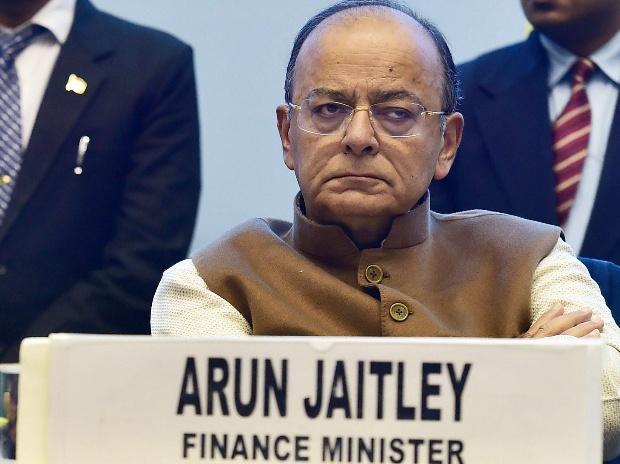
After lowering the charge remaining 12 months to 25 percentage for small agencies with a turnover of up to 500 million rupees ($7.9 million), organizations are awaiting Finance Minister Arun Jaitley to move again this week. half of of the one hundred twenty specialists surveyed with the aid of Deloitte anticipate the price to be cut to twenty-five percent for all businesses. Rakesh Nangia, head of tax advisory firm Nangia & Co, warned of a “flight of capital” if tax charges aren’t reduced.

Budget 2018: Brokers asked to collect higher margins to contain risks

There are concerns that the huge build-up of positions in equity derivatives could pose a systemic risk

303.jpg

Beforehand of Budget 2018, market regulator Securities and exchange Board of India (Sebi) and inventory exchanges are taking precautions, anticipating a huge run-up within the fairness marketplace.

Sebi has asked agents to gather better margins from those with enormous positions in futures and options. these include overseas establishments, wealthy buyers and proprietary desks.

There are worries that the big construct-up of positions in equity derivatives should pose a systemic chance. stock exchanges have requested agents to mop up extra deposits from customers with giant publicity to derivatives.

“Inside the joint assembly of exchanges and Sebi, it has been decided that markets should be alerted at different stages of MWPL utilisation so that investors can take an knowledgeable choice on whether to maintain or square off their current positions properly earlier than regulatory/surveillance movements set in,” said an NSE round on January 23.

Brokers and traders have reportedly been asked to cough up 18-30 in step with cent extra margins at once. the extra surveillance margins on a client’s open positions could be a part of a stress-checking out that takes into account the worst-case loss.

Brokers typically collect two margins.

The first is an prematurely margin, additionally referred to as the SPAN margin, and the second the exposure margin. The SPAN margin is amassed on the time of starting up trades, at the same time as the extra margin over and above this is the publicity margin. this is how the MWPL works.

On the cease of each day, the combination open hobby throughout all exchanges in the futures & alternatives on character scrips is disseminated along with the market-extensive function restriction for that scrip to test whether or not the aggregate open interest for any scrip exceeds 95 per cent of the marketplace-huge function limit for that scrip. If yes, the trade takes note of open positions of all customers/TMs as on the quit of that day in that scrip, and from subsequent day onwards the client/TMs must change handiest to lower their positions via offsetting positions till the everyday buying and selling in the scrip is resumed.

The everyday buying and selling within the scrip is resumed only after the combination open hobby across exchanges comes all the way down to eighty according to cent or beneath of the marketplace-extensive role restrict.

A facility is to be had on the buying and selling gadget to display an alert as soon as the open interest at the countrywide stock change (NSE) inside the futures & alternatives agreement in a security exceeds 60 according to cent of the market-extensive function restriction unique for such protection. Such indicators at present are displayed at durations of 10 minutes.

Tuesday, 30 January 2018

Budget 2018 and its Possible Impact on Stock Market

The future movements in the markets over the next month or so will be decided by the contents of the Budget 2018.

1516719581-7379

Lately both the major indices in India has scaled record heights, the Sensex has crossed the 36000 mark whereas the Nifty has also breached the 11000 level.The future movements in the markets over the next month or so will be decided by the contents of the Budget 2018. Although in the period leading up to the Budget utmost secrecy is observed but some information does filter through, other than that rumours and informed speculations are also what that drives the sentiments of the markets. Generally there are negative sentiments and expectations attached to the Budget thus investors usually postpone buying decisions before the Budget is tabled. Thus in the past mostly the benchmark index has fallen in the month leading up to the Budget and the markets both Sensex and Nifty have seen gains after the Budget has been delivered. This has been the trend in six out of the last nine Budgets. But the said trend has now been broken with the markets touching new heights just before the Budget 2018. Few numbers in the Budget 2018 such as that of fiscal deficit and disinvestment targets will have a major impact on the direction of the bourses. Experts believe that the days leading up to the Budget the markets will see a rally due to various anticipations and right after the Budget profit booking in the stock market may be seen. However, there will be opportunities for investment in select sectors also.

Expected Impact of Budget 2018 on Stock Market

It is largely expected that the Budget 2018 will be neutral for the stock markets thus no sharp surge or dip in Indian indices is being expected. As the said Budget is the last full budget before the Lok Sabha elections in 2019 and before multiple assembly elections in 2018 no major reforms are expected to be undertaken. Experts believe that in the near future with record FII inflows, soaring investments in mutual fund, low interest rates and a strong rupee against the dollar the outlook in the markets is expected to remain positive. Although on the day of the Budget 2018 and the 48 to 72 hours period after the same the markets are expected to remain extremely volatile. In the Budget 2018 the markets would like to see a bump up in Government’s revenues to tackle fiscal deficit but most likely the fiscal deficit target of 3.2% of the GDP would be missed by the Government.

Budget 2018 LIVE: BJP's loyal salaried class wants tax exemptions raised

Will the Modi govt's last full Union Budget before general elections 2019 will be a populist one? All eyes are now on FM Arun Jaitley's Budget speech on Thursday

1517110621-5484

As Finance Minister Arun Jaitley gets set to present Budget 2018, the last full Union Budget of the Narendra Modi-led central government in its present term, there is an anticipation that he will somewhat shed his prudent stance in favour of a more populist stance one. The view emanates from the fact that this will be the finance minister’s last chance to please the voters through a Budget 2018 before 2019 general elections.

Populism in the government’s annual budget could assume policy decisions like lower tax rate for the salaried class, lower corporate tax rates in tune with Trump’s benevolence for the corporate class in the US and big bonanzas for India’s farmers.

If the Economic Survey, prepared by Chief Economic Advisor Arvind Subramanian and his team is anything to go by, Jaitley has all the ammunition that he needs to sound the election bugle for 2019 with this Budget. All he needs to do is lock, load and fire.

CATCH ALL THE LIVE UPDATES : Budget 2018 Live

Budget 2018: Will the social sector get a boost amid rural distress?

After a disappointing run under the Modi government so far, a significant increase in social sector allocations and their proper utilisation is the need of the day

293.jpg


India’s social region underneath the Modi government has had a disappointing run. within the run-up to the 2014 elections, the public debate among economists Amartya Sen and Jagdish Bhagwati set the tone for what changed into at stake. whilst Sen believed that the Centre needed to make investments extra in social infrastructure to enhance productivity and therefore raise boom, Bhagwati believed that only a focal point on increase could yield the assets needed for making an investment in social region schemes.

In 2018, it’s miles clear that with big rural and agrarian distress, a vast increase in social area allocations and their right utilisation is truely important to bring a great deal-wanted relief to the us of a’s more prone sections. another purpose for hoping that the approaching union finances will appreciably growth social area spending is that over the last 3 years, standard allocation for the social quarter has no longer been fine.

After the Modi government got here to energy in mid-2014, it, by means of and big, maintained the allocations provided within the interim price range of the outgoing UPA-II government. but, later inside the 12 months vital cuts had been made in some vital social area regions, which had an adverse impact on prone sections. as an example, in overdue 2014, to fulfill financial deficit targets, the Modi government slashed expenditure on education and health underneath its revised estimates plan,whilst the departments of panchayati raj, rural development and sanitation faced cuts of almost 25% every. This, media reports on the time indicated, changed into in keeping with the Modi authorities’s precedence on infrastructure spending.

Inside the subsequent finances (2015-2016), even larger cuts had been made in some social zone allocations. The reason given however became that more assets were being transferred to states on the basis of the recommendations of the 14th finance fee. but this cut-again became no longer correctly prepared for and there had been at the least short-time period troubles and price range-crunch for some critical components and schemes of social quarter.

The essential question whether or not over a period of time nation governments have been able to effectively adjust and made up for some vital reduce-backs has not been properly spoke back but and we do not understand whether on the whole the budget availability for social area have stabilised, accelerated or decreased since the implementation of the pointers of the 14th Finance fee as this will require precise estimates of social zone allocations for all states, now not simply finances estimates but additionally actuals.

Monday, 29 January 2018

Budget 2018 Preview: Before 2019 polls, govt will aim to woo rural voters

Amid voter discontent over lack of jobs, Modi says India on track to become $5-trn economy by 2025; big splurge unlikely because of fiscal pressure

296.jpg

India’s government will be trying to woo back rural voters and small businesses when it announces the 2018/19 budget on Thursday and pick up economic momentum as it heads into a season of elections, officials said.

Prime Minister Narendra Modi, extolling India as a model of economic growth and political openness, told the World Economic Forum in Davos last week the country would be a $5 trillion economy by 2025, more than double its current size.

But at home, Modi is facing voter discontent over falling farm incomes and the lack of jobs for hundreds of thousands of youth entering the labour force each month.

This month, the government lowered its gross domestic growth forecast for the year ending March, 2018 to 6.5 percent, the weakest pace in four years. Growth slowed down because of a chaotic rollout of nationwide goods and service tax (GST) last year and a shock move to ban high-value currency notes in late 2016.

Modi’s ruling alliance barely scraped through an election in his home state of Gujarat last month and is now faced with elections in eight states spread over 2018 and a general election that must be held by May next year.

Finance Minister Arun Jaitley will likely step up funding of existing rural programmes such as a jobs guarantee scheme, rural housing and a crop insurance plan in what will be his final full year budget before the general election.

Budget proposals are a closely guarded secret, but a finance ministry official with direct knowledge of the discussions said: “The government’s top priority is to create jobs and boost growth.”

The official added: “The Budget2018 is likely to offer incentives to the farm sector and small businesses.” Small businesses form the core support base of Modi’s Bharatiya Janata Party and they are hurting over the implementation of the GST, with its cumbersome compliance procedures, and the demonetisation policy that sucked cash out of the system.

Jaitley is also expected to stay the course on a massive plan to build highways, modernise the railways and end infrastructure bottlenecks that have long hobbled Asia’s third-largest economy.

As early as November, as he began laying out his priorities, Jaitley said at a conference of government and industry leaders that “two areas to concentrate on in the upcoming budget are rural India and development of infrastructure.” India’s growth should pick up to 7.4 percent in 2018 as against China’s 6.6 percent, the IMF said this month, as the twin effects from the tax reform and demonetisation wear off.

Budget 2018: The healthcare system needs more money and an urgent overhaul

This is the last full budget of the present government and the last opportunity for it to demonstrate its commitment to India's health and nutrition

291.jpg


Sluggish upgrades in fundamental indicators of maternal and infant mortality, double burden of communicable as well as non-communicable diseases, excessive out-of-pocket expenditure, a failing public region and heavily commercialised private zone characterise the healthcare disaster in India.

The yr 2017 saw some of incidents in the health sector across the united states which spotlight each of these issues.

At the same time as the deaths of children in a public health center in Gorakhpur because of alleged disruption of oxygen supply highlighted the systemic screw ups in public fitness provision, the instances of excessive billing and negligence in large corporate hospitals (e.g. the case of dengue dying in Fortis medical institution, Gurugram) confirmed that the unregulated personal area isn’t any way to India’s healthcare troubles. The protests towards the NEET examination, in particular in Tamil Nadu, added forth the complexities worried in ensuring a honest and inclusive machine of scientific education. then again, the resistance to the Karnataka personal scientific institutions Act (KPME) verified the problem in regulating the private region and the have an impact on of docs running in the private area.

The listing is long and limitless, but what all of those factor to is that the fitness sector in India wishes severe overhaul and plenty extra interest.


One of the crucial problems has been the low degrees of public spending on fitness and as a end result the bad get right of entry to to less expensive and true great healthcare for the general public of India’s population. the public expenditure on health at approximately 1.2% of the GDP is amongst the lowest inside the global. Public health centers suffer from negative infrastructure and human resource inadequacies. as an example, consistent with the rural health facts 2017, 13% of the sanctioned medical examiner (lady) posts and 37% of the medical examiner (male) posts stay vacant. average, simplest 11% of sub-centres and about 13% of number one fitness centres (percent) are functioning as in step with Indian Public health requirements (IPHS). there is therefore an urgent need for greater assets to be allocated for public healthcare at the side of measures to strengthen the shipping of fitness offerings.

The national health coverage 2017 ambitions to “growth health expenditure by authorities as a percentage of GDP from the prevailing 1.15% to two.5 % via 2025”

Even though it has already been stated that the health price range isn’t going to peer a enormous growth, it must be stated that with out a full-size enhancement inside the allocations lots of the wished reforms in healthcare provision will not be possible. achieving this, requires no longer simply an enhancement inside the significant budget but also will increase in every of the state budgets as well. but, the important government can play an crucial function.