Wednesday, 31 January 2018

Budget 2018: Revenue shortfall put corporate tax cuts on hold

Modi pledged in 2015 to bring down corporate taxes over four years, but businesses are still waiting for a roadmap on how that will happen

307.jpg


Businesses awaiting Indian top Minister Narendra Modi to follow via on a pledge to reduce corporate taxes may additionally need to wait a chunk longer.

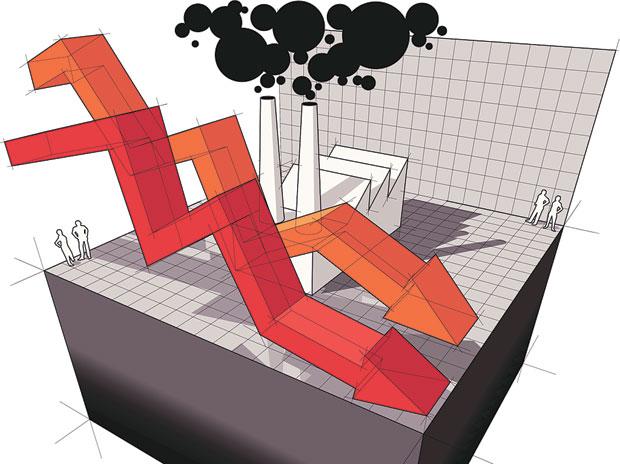
In his final complete finances before 2019 elections, Modi is dealing with a revenue squeeze that may make it hard to deliver on a promise to lower the primary corporate tax rate over the years to twenty-five percent from 30 percentage. It’s a capture-22 situation for the most effective, who is also seeking to trap overseas traders at a time while america, united kingdom and other international locations are decreasing business taxes.

Right here’s a examine Modi’s task in advance of the authorities’s finances 2018 on Thursday.
Why cut?

Modi pledged in 2015 to deliver down company taxes over 4 years, however organizations are nevertheless looking ahead to a roadmap on how so that it will show up. It’s a part of his assignment to improve India’s funding climate: he is likewise reducing pink-tape, spurring the liquidation of assets to hurry-up the recovery of horrific loans, and added a country wide sales tax final 12 months to reduce down business expenses. India is ranked 119 out of a hundred ninety countries on the subject of ease of paying taxes, consistent with the world bank’s Doing enterprise index.

Whilst the ones reforms have helped India win a credit score improve and document overseas direct inflows remaining 12 months, Modi needs to preserve funding going to assist aid an economy that’s set to make bigger at its slowest pace in 4 years.

Tax opposition around the arena is heating up. the usa decreased corporate taxes by 14 percent factors to 21 percentage, with businesses like Apple Inc, Wal-Mart shops Inc and JPMorgan Chase & Co saying plans to elevate investment, hiring or wages.

“America has made corporate tax quotes competitive and India wishes to reply,” stated Jayesh Sanghvi, a tax associate at EY in Hyderabad. If it doesn’t, companies will examine arbitrage possibilities given the 10-15 percent factor distinction, he said.

After lowering the charge remaining 12 months to 25 percentage for small agencies with a turnover of up to 500 million rupees ($7.9 million), organizations are awaiting Finance Minister Arun Jaitley to move again this week. half of of the one hundred twenty specialists surveyed with the aid of Deloitte anticipate the price to be cut to twenty-five percent for all businesses. Rakesh Nangia, head of tax advisory firm Nangia & Co, warned of a “flight of capital” if tax charges aren’t reduced.

Budget 2018: Brokers asked to collect higher margins to contain risks

There are concerns that the huge build-up of positions in equity derivatives could pose a systemic risk

303.jpg

Beforehand of Budget 2018, market regulator Securities and exchange Board of India (Sebi) and inventory exchanges are taking precautions, anticipating a huge run-up within the fairness marketplace.

Sebi has asked agents to gather better margins from those with enormous positions in futures and options. these include overseas establishments, wealthy buyers and proprietary desks.

There are worries that the big construct-up of positions in equity derivatives should pose a systemic chance. stock exchanges have requested agents to mop up extra deposits from customers with giant publicity to derivatives.

“Inside the joint assembly of exchanges and Sebi, it has been decided that markets should be alerted at different stages of MWPL utilisation so that investors can take an knowledgeable choice on whether to maintain or square off their current positions properly earlier than regulatory/surveillance movements set in,” said an NSE round on January 23.

Brokers and traders have reportedly been asked to cough up 18-30 in step with cent extra margins at once. the extra surveillance margins on a client’s open positions could be a part of a stress-checking out that takes into account the worst-case loss.

Brokers typically collect two margins.

The first is an prematurely margin, additionally referred to as the SPAN margin, and the second the exposure margin. The SPAN margin is amassed on the time of starting up trades, at the same time as the extra margin over and above this is the publicity margin. this is how the MWPL works.

On the cease of each day, the combination open hobby throughout all exchanges in the futures & alternatives on character scrips is disseminated along with the market-extensive function restriction for that scrip to test whether or not the aggregate open interest for any scrip exceeds 95 per cent of the marketplace-huge function limit for that scrip. If yes, the trade takes note of open positions of all customers/TMs as on the quit of that day in that scrip, and from subsequent day onwards the client/TMs must change handiest to lower their positions via offsetting positions till the everyday buying and selling in the scrip is resumed.

The everyday buying and selling within the scrip is resumed only after the combination open hobby across exchanges comes all the way down to eighty according to cent or beneath of the marketplace-extensive role restrict.

A facility is to be had on the buying and selling gadget to display an alert as soon as the open interest at the countrywide stock change (NSE) inside the futures & alternatives agreement in a security exceeds 60 according to cent of the market-extensive function restriction unique for such protection. Such indicators at present are displayed at durations of 10 minutes.

Tuesday, 30 January 2018

Budget 2018 and its Possible Impact on Stock Market

The future movements in the markets over the next month or so will be decided by the contents of the Budget 2018.

1516719581-7379

Lately both the major indices in India has scaled record heights, the Sensex has crossed the 36000 mark whereas the Nifty has also breached the 11000 level.The future movements in the markets over the next month or so will be decided by the contents of the Budget 2018. Although in the period leading up to the Budget utmost secrecy is observed but some information does filter through, other than that rumours and informed speculations are also what that drives the sentiments of the markets. Generally there are negative sentiments and expectations attached to the Budget thus investors usually postpone buying decisions before the Budget is tabled. Thus in the past mostly the benchmark index has fallen in the month leading up to the Budget and the markets both Sensex and Nifty have seen gains after the Budget has been delivered. This has been the trend in six out of the last nine Budgets. But the said trend has now been broken with the markets touching new heights just before the Budget 2018. Few numbers in the Budget 2018 such as that of fiscal deficit and disinvestment targets will have a major impact on the direction of the bourses. Experts believe that the days leading up to the Budget the markets will see a rally due to various anticipations and right after the Budget profit booking in the stock market may be seen. However, there will be opportunities for investment in select sectors also.

Expected Impact of Budget 2018 on Stock Market

It is largely expected that the Budget 2018 will be neutral for the stock markets thus no sharp surge or dip in Indian indices is being expected. As the said Budget is the last full budget before the Lok Sabha elections in 2019 and before multiple assembly elections in 2018 no major reforms are expected to be undertaken. Experts believe that in the near future with record FII inflows, soaring investments in mutual fund, low interest rates and a strong rupee against the dollar the outlook in the markets is expected to remain positive. Although on the day of the Budget 2018 and the 48 to 72 hours period after the same the markets are expected to remain extremely volatile. In the Budget 2018 the markets would like to see a bump up in Government’s revenues to tackle fiscal deficit but most likely the fiscal deficit target of 3.2% of the GDP would be missed by the Government.

Budget 2018 LIVE: BJP's loyal salaried class wants tax exemptions raised

Will the Modi govt's last full Union Budget before general elections 2019 will be a populist one? All eyes are now on FM Arun Jaitley's Budget speech on Thursday

1517110621-5484

As Finance Minister Arun Jaitley gets set to present Budget 2018, the last full Union Budget of the Narendra Modi-led central government in its present term, there is an anticipation that he will somewhat shed his prudent stance in favour of a more populist stance one. The view emanates from the fact that this will be the finance minister’s last chance to please the voters through a Budget 2018 before 2019 general elections.

Populism in the government’s annual budget could assume policy decisions like lower tax rate for the salaried class, lower corporate tax rates in tune with Trump’s benevolence for the corporate class in the US and big bonanzas for India’s farmers.

If the Economic Survey, prepared by Chief Economic Advisor Arvind Subramanian and his team is anything to go by, Jaitley has all the ammunition that he needs to sound the election bugle for 2019 with this Budget. All he needs to do is lock, load and fire.

CATCH ALL THE LIVE UPDATES : Budget 2018 Live

Budget 2018: Will the social sector get a boost amid rural distress?

After a disappointing run under the Modi government so far, a significant increase in social sector allocations and their proper utilisation is the need of the day

293.jpg


India’s social region underneath the Modi government has had a disappointing run. within the run-up to the 2014 elections, the public debate among economists Amartya Sen and Jagdish Bhagwati set the tone for what changed into at stake. whilst Sen believed that the Centre needed to make investments extra in social infrastructure to enhance productivity and therefore raise boom, Bhagwati believed that only a focal point on increase could yield the assets needed for making an investment in social region schemes.

In 2018, it’s miles clear that with big rural and agrarian distress, a vast increase in social area allocations and their right utilisation is truely important to bring a great deal-wanted relief to the us of a’s more prone sections. another purpose for hoping that the approaching union finances will appreciably growth social area spending is that over the last 3 years, standard allocation for the social quarter has no longer been fine.

After the Modi government got here to energy in mid-2014, it, by means of and big, maintained the allocations provided within the interim price range of the outgoing UPA-II government. but, later inside the 12 months vital cuts had been made in some vital social area regions, which had an adverse impact on prone sections. as an example, in overdue 2014, to fulfill financial deficit targets, the Modi government slashed expenditure on education and health underneath its revised estimates plan,whilst the departments of panchayati raj, rural development and sanitation faced cuts of almost 25% every. This, media reports on the time indicated, changed into in keeping with the Modi authorities’s precedence on infrastructure spending.

Inside the subsequent finances (2015-2016), even larger cuts had been made in some social zone allocations. The reason given however became that more assets were being transferred to states on the basis of the recommendations of the 14th finance fee. but this cut-again became no longer correctly prepared for and there had been at the least short-time period troubles and price range-crunch for some critical components and schemes of social quarter.

The essential question whether or not over a period of time nation governments have been able to effectively adjust and made up for some vital reduce-backs has not been properly spoke back but and we do not understand whether on the whole the budget availability for social area have stabilised, accelerated or decreased since the implementation of the pointers of the 14th Finance fee as this will require precise estimates of social zone allocations for all states, now not simply finances estimates but additionally actuals.

Monday, 29 January 2018

Budget 2018 Preview: Before 2019 polls, govt will aim to woo rural voters

Amid voter discontent over lack of jobs, Modi says India on track to become $5-trn economy by 2025; big splurge unlikely because of fiscal pressure

296.jpg

India’s government will be trying to woo back rural voters and small businesses when it announces the 2018/19 budget on Thursday and pick up economic momentum as it heads into a season of elections, officials said.

Prime Minister Narendra Modi, extolling India as a model of economic growth and political openness, told the World Economic Forum in Davos last week the country would be a $5 trillion economy by 2025, more than double its current size.

But at home, Modi is facing voter discontent over falling farm incomes and the lack of jobs for hundreds of thousands of youth entering the labour force each month.

This month, the government lowered its gross domestic growth forecast for the year ending March, 2018 to 6.5 percent, the weakest pace in four years. Growth slowed down because of a chaotic rollout of nationwide goods and service tax (GST) last year and a shock move to ban high-value currency notes in late 2016.

Modi’s ruling alliance barely scraped through an election in his home state of Gujarat last month and is now faced with elections in eight states spread over 2018 and a general election that must be held by May next year.

Finance Minister Arun Jaitley will likely step up funding of existing rural programmes such as a jobs guarantee scheme, rural housing and a crop insurance plan in what will be his final full year budget before the general election.

Budget proposals are a closely guarded secret, but a finance ministry official with direct knowledge of the discussions said: “The government’s top priority is to create jobs and boost growth.”

The official added: “The Budget2018 is likely to offer incentives to the farm sector and small businesses.” Small businesses form the core support base of Modi’s Bharatiya Janata Party and they are hurting over the implementation of the GST, with its cumbersome compliance procedures, and the demonetisation policy that sucked cash out of the system.

Jaitley is also expected to stay the course on a massive plan to build highways, modernise the railways and end infrastructure bottlenecks that have long hobbled Asia’s third-largest economy.

As early as November, as he began laying out his priorities, Jaitley said at a conference of government and industry leaders that “two areas to concentrate on in the upcoming budget are rural India and development of infrastructure.” India’s growth should pick up to 7.4 percent in 2018 as against China’s 6.6 percent, the IMF said this month, as the twin effects from the tax reform and demonetisation wear off.

Budget 2018: The healthcare system needs more money and an urgent overhaul

This is the last full budget of the present government and the last opportunity for it to demonstrate its commitment to India's health and nutrition

291.jpg


Sluggish upgrades in fundamental indicators of maternal and infant mortality, double burden of communicable as well as non-communicable diseases, excessive out-of-pocket expenditure, a failing public region and heavily commercialised private zone characterise the healthcare disaster in India.

The yr 2017 saw some of incidents in the health sector across the united states which spotlight each of these issues.

At the same time as the deaths of children in a public health center in Gorakhpur because of alleged disruption of oxygen supply highlighted the systemic screw ups in public fitness provision, the instances of excessive billing and negligence in large corporate hospitals (e.g. the case of dengue dying in Fortis medical institution, Gurugram) confirmed that the unregulated personal area isn’t any way to India’s healthcare troubles. The protests towards the NEET examination, in particular in Tamil Nadu, added forth the complexities worried in ensuring a honest and inclusive machine of scientific education. then again, the resistance to the Karnataka personal scientific institutions Act (KPME) verified the problem in regulating the private region and the have an impact on of docs running in the private area.

The listing is long and limitless, but what all of those factor to is that the fitness sector in India wishes severe overhaul and plenty extra interest.


One of the crucial problems has been the low degrees of public spending on fitness and as a end result the bad get right of entry to to less expensive and true great healthcare for the general public of India’s population. the public expenditure on health at approximately 1.2% of the GDP is amongst the lowest inside the global. Public health centers suffer from negative infrastructure and human resource inadequacies. as an example, consistent with the rural health facts 2017, 13% of the sanctioned medical examiner (lady) posts and 37% of the medical examiner (male) posts stay vacant. average, simplest 11% of sub-centres and about 13% of number one fitness centres (percent) are functioning as in step with Indian Public health requirements (IPHS). there is therefore an urgent need for greater assets to be allocated for public healthcare at the side of measures to strengthen the shipping of fitness offerings.

The national health coverage 2017 ambitions to “growth health expenditure by authorities as a percentage of GDP from the prevailing 1.15% to two.5 % via 2025”

Even though it has already been stated that the health price range isn’t going to peer a enormous growth, it must be stated that with out a full-size enhancement inside the allocations lots of the wished reforms in healthcare provision will not be possible. achieving this, requires no longer simply an enhancement inside the significant budget but also will increase in every of the state budgets as well. but, the important government can play an crucial function.

Economic Survey 2017-18 to be out today: How accurate were past editions?

294.jpg


After the 2009-10 economic survey, which projected monetary increase on the dot for 2010-11, most surveys in succeeding years were off target in predicting growth. notably, the most effective other exception became the survey of 2015-16 that pegged monetary increase in quite a number 7-7.seventy five consistent with cent for 2016-17 and real boom was indeed 7.1 in step with cent. The increase fell inside the range anticipated by way of the survey despite the 12 months witnessing demonetisation. The predominant setback in phrases of prediction may be the survey of 2010-11, which had forecast boom to be nine consistent with cent for 2011-12 (plus or minus 0.25 in line with cent) however boom fell all the way down to simply 6.five according to cent. nine according to cent boom has remained wishful wondering these days even after the exchange within the GDP computation method, which many say overestimates the growth.

Allow us to now see the focal point of the four surveys provided below the Modi government, three of which had been authored via chief financial guide (CEA) Arvind Subramanian’s team. the primary one was authored by using a crew led by way of another Arvind — then financial affairs secretary Arvind Mayaram.

The Economic Survey, 2013-14:

The 2013-14 survey centered on reviving funding. It stated this required a three-pronged approach that worked via improving India’s lengthy-time period boom prospects. This approach become to work through ensuring low inflation through putting in place a framework for financial policy, economic consolidation, and food market reforms. It called for tax reforms via goods and services tax (GST) and direct taxes code. even as GST got here over 3 years later, direct taxes code changed into shelved a year after. only in 2017, the authorities appointed a committee under critical Board of Direct Taxes member Arbind Modi to redraft direct taxes.

Additionally examine: budget session starts offevolved nowadays, eyes on economic survey & pinnacle 10 tendencies

The Economic Survey, 2014-15:

This became the primary survey under Subramanian. Taking idea from the international financial Fund’s global economic Outlook, this Survey departed structurally from its predecessors and become presented in volumes. volume one mentioned the outlook and potentialities as well as some of analytical chapters addressing topical coverage worries. quantity defined latest tendencies in all the fundamental sectors of the financial system and contained all of the statistical tables and facts. In a experience, quantity one become forward-searching but won from the perspective supplied through the latest past, which was the subject of quantity . The survey centered at the trinity of Jan Dhan, Aadhaar, and cellular (JAM).

Budget session LIVE: 2018 is the year of New India, says President Kovind

Economic Survey 2018 is a flagship annual file of the Finance Ministry that evaluations the overall kingdom of the economic system


292.jpg
 
Budget 2018 session LIVE updates: The Economic Survey will be released today. It marks that start of the Budget session of Parliament. The Economic Survey 2018 will be read out by Finance Minister Arun Jaitley, as a precursor to the Budget 2018-19, to be announced on Thursday. In view of this, Finance Ministry's Chief Economic Adviser, Arvind Subramanian started a web page wherein he has shared some details on the Survey.
 
What is Economic Survey?
 
It is a flagship annual document of the Finance Ministry. It reviews the overall state of the economy in the last 12 months. In August last year, however, the government for the first time presented a mid-term economic survey.
 

Sunday, 28 January 2018

Budget 2018: Corporate America urges Arun Jaitley to reduce tax uncertainty

281

In advance of the Budget, corporate the us has urged Finance Minister Arun Jaitley for similarly reduction in tax uncertainty for multinational corporations and institutional traders, a step which it said would assist appeal to more foreign direct investments to India.

“A large advantageous step toward enhancing the investment weather might be to in addition lessen tax uncertainty for multinational agencies and institutional traders in India,” Nisha Desai Biswal, the president of america India commercial enterprise Council (USIBC), stated in a memorandum submitted to Jaitley.

Also examine: Budget 2018: New bottoms-up mechanism for farm-gate marketing probable

Noting that during cutting-edge economic environment, scarce capital is allotted to markets supplying most advantageous returns, Biswal stated international corporations allocate investments in which put up-tax returns for a given hazard profile are highest.

when tax prices are unsure, specially out of the country, buyers normally provide for them on a most conservative basis, she located.

“therefore, tax uncertainty outcomes in an boom of threat whilst making an investment in any given assignment drives traders to both withhold investments or require a better fee of return to account for this threat, accordingly elevating the value of capital within the uncertain market,” said Biswal, who changed into the Obama administration’s point character for South and principal Asia.

Welcoming high Minister Narendra Modi’s plans to “remodel” India’s economy and his efforts to sell India as a international investment vacation spot, the USIBC said for India to be successful in attracting the global traders, it needs to create a more stable and predictable monetary regime and address retrospective taxation and legacy cases that continue to be open.

“USIBC members believe that unless resolved, the lack of clarity in the government’s approach to taxation risk will undermine progress in other areas of the economy and will continue to damage India’s reputation among investors,” said the memorandum running into 39 pages.

Describing it as a major concern for international investors, including USIBC members, Biswal said by rescinding the historical retrospective tax legislation, India would have an opportunity to proceed to a satisfactory resolution of legacy cases which would be beneficial to both India and the companies involved.

Budget 2018: Govt to 'leave no stone unturned' in passing triple talaq Bill

The government met leaders of political parties at a meeting in Parliament House on Sunday and also sought their cooperation

1503517767-5689

The government on Sunday said it would "leave no stone unturned" to ensure the passage of the triple talaq Bill in the Budget session of Parliament starting Monday, and asserted that it would talk to various parties for a consensus on the issue.

The government met leaders of political parties at a meeting in Parliament House on Sunday and also sought their cooperation in ensuring the success of the crucial session during which the Union Budget would be presented.

The all-party meeting was attended by Prime Minister Narendra Modi, Union ministers Rajnath Singh, Arun Jaitley and Ananth Kumar, besides leaders of the Opposition and other parties.

Speaker Sumitra Mahajan also held a dinner meeting with party leaders for the session's smooth functioning and said the leaders had assured her of their cooperation.


Addressing the floor leaders of the various parties in the Rajya Sabha and Lok Sabha, Prime Minister Modi said the government accords importance to issues raised by the parties and urged their leaders to create a "constructive atmosphere for the national good".

Parliamentary Affairs Minister Kumar described the meeting as "fruitful" and said the prime minister urged the leaders of the parties to make the session successful.

Read More : Budget 2018

Budget 2018: New bottoms-up mechanism for farm-gate marketing likely

282.jpg
The Budget for 2018-19 may also announce haats and organic hubs in 1,000 village clusters throughout the country.
Modelled on Harihar Haath in Jagdalpur district of Chhattisgarh, these markets will enable villagers to sell their produce without delay to purchasers, bypassing middlemen, thereby helping them realize a very good price for their produce.
Began as a pilot project in 2017, Harihar Haath is a unique bottoms-up technique to farm marketing. it’s far a consortium of 4 farmer-manufacturer corporations, five cooperatives, and 13 ladies self-help groups. it has been taking extraordinary strides to create a threat-loose area for farmers.
The farmers collectively buy goods from growers and sell them at rates decrease than triumphing marketplace fees. maximum of the farmers are ladies, drawn from self-assist organizations beneath the Mahila Kisan Sashaktikaran Pariyojana of the agricultural improvement ministry.
The state and district administrations offer them space for selling their produce. With month-to-month income of over Rs two hundred,000 and income of over Rs 50,000, Harihar Haath handles 250 customer footfalls per day, and sells 1.five tonnes of produce each day.
We want the Harihar Haath model to be replicated in lots of greater locations across the u . s .,” an professional stated.
Those clusters are a part of the 5,000-ordinary ones already diagnosed by way of the assignment Antodaya programme. The assignment, which pursuits to rid 50,000 gram panchayats of poverty in 1,000 days by means of converging all schemes, become introduced within the price range for 2017-18 by using Finance Minister Arun Jaitley.
It is a nation-stage initiative for rural transformation to make a distinction based on measurable consequences to the lives of 10 million families in 5,000 rural clusters. The gram panchayats chosen own a high stage of social capital and have the potential to put into effect fast rural transformation for poverty removal.
The task encourages partnerships with a network of professionals, institutions and corporations to accelerate the transformation of rural livelihoods. Self-assist organizations are enablers because of their social capital and their demonstrated capability for social mobilisation.

Saturday, 27 January 2018

Budget 2018: FinMin could raise disinvestment target to Rs 1 trn

272


Buoyed by the success of this year’s disinvestment programme, the Finance Ministry could set an even higher target of Rs 900 billion-1 trillion (Rs 90,000-1,00,000 crore) for 2018-19. This will encompass the sale of Air India, a number of other privatization initiatives, mergers, initial public offerings, the centre’s two exchange-traded funds, buybacks and offers-for-sale, and even monetization of land assets.

The budgeted estimate for 2017-18 is Rs 725 billion (Rs 72,500 crore), the highest ever for a year so far. With the acquisition of Hindustan Petroleum by ONGC expected to be completed soon, that target will be easily outstripped. As of January 22, divestment proceeds stood at Rs 555 billion (Rs 55,500 crore). ONGC’s acquisition of HPCL’s 51 per cent stake is valued at Rs 369 billion (Rs 36,900 crore). That would take divestment proceeds to Rs 925 billion (Rs 92,500 crore) for 2017-18.

The upcoming 2018-19 budget, to be presented by Finance Minister Arun Jaitley, while not expected to be outright populist, will still contain sops and see an increase in allocation across schemes and public expenditure. He will require resources, and disinvestment is expected to be a major one.

While Air India will be the marquee sale, expected to be completed by October 2018, the centre may sell Pawan Hans as well, among other loss-making PSUs, Business Standard has learnt. The department of investment and public asset management (DIPAM) has already created a pipeline for potential stake sale through various methods.

State-owned construction company NBCC Ltd, which has already bought Hindustan Steelworks Construction Ltd this year, may buy other smaller construction and engineering PSUs, sources said. The candidates are Hindustan Prefab, Engineering Projects India Ltd, NPCC Ltd, and HSCC Ltd.

The centre launched its second PSU ETF, the Bharat 22 ETF in November and garneted Rs 145 billion (Rs 14,500 crore). An official said that there is still a massive interest amongst investors, and a second tranche is certain to be launched early next fiscal. There could be further tranches of its first PSU ETF as well.

The pipeline includes a number of pending IPOs as well. The names include defence companies like Hindustan Aeronautics Ltd, Garden Reach Shipbuilders, Bharat Dynamics and Mazagaon Dockyards, railway companies like Ircon, RITES, IRCTC and IRFC, and three general insurance companies. While a few of these could happen before March 31, most are slated for next year.

Preparations are being carried out for a number of OFSs as well. The plans are for a 10 per cent stake in NHPC, Power Finance Corporation and SAIL, 15 per cent in NLC, five per cent in Rural Electrification Corporation and three per cent in Indian Oil. Buybacks by PSUs are expected to continue next year as well.

Budget 2018: Has Modi govt delivered on its promise of urban development?

BJP govt faces this situation as it heads into its last full budget before general elections in 2019

1511983285-2181

With India’s urban population rising by 11 million annually–the equivalent of adding a Bengaluru every year–and urban voters forming a major vote base for the Bharatiya Janata Party (BJP), making money and management available for cities would appear to be a priority.

But promises of smart cities and managing growth to provide jobs and housing for the coming urban population jump from 377 million in 2011 to 600 million in 2031–with 20% of this growth expected to come from rural distress and migration–are, currently, displaying little progress.

Less than a quarter of central funds for four major national programmes for India’s urban renewal have been used, according to an IndiaSpend analysis of government data. Since urban development is a state subject, state governments implement these national schemes with central assistance playing a key role. State and urban bodies are also expected to finance a portion of the program on their own by raising funds from other sources.

A further disaggregation of central funds data from the ministry of housing and urban affairs reveals:
  • Upto February 2017–the last release of data–no more than 3% of smart-city projects were completed and 12% of central funds were released;
  • With two years to deadline, the Centre–as of July 2017, the last release of data–was still to release 87% of funds for urban infrastructure in 500 cities and towns;
  • Upto July 2017, 95.4% of central funds sanctioned for upgrading 12 heritage cities were unused, as the programme’s November 2018 deadline approaches;
  • Work on 93% of sanctioned houses–meant to meet 16% of India’s urban housing shortage–was incomplete as of January 2018. The target of housing for all: 2022;
  • Little is known of how state governments are raising funds and implementing these programmes.
This is the situation facing the BJP government, as it heads into its last full budget before general elections in 2019, at a time when Prime Minister Narendra Modi has promised 100 smart cities and housing for all by 2022.

The urban sector will not just watch how much money is set aside in the 2018-19 budget but also how it is used, as the National Democratic Alliance (NDA) tries to deliver on its promises of urban development and rejuvenation ahead of upcoming assembly elections in eight states and the 2019 general elections.

Housing

Indian cities and towns will become hubs of growth over the next two decades, finance minister Arun Jaitley said on December 2, 2016, acknowledging “a lack of ideas” on how to prepare India for its coming urban explosion.

Besides ideas, implementation of what exists is stuttering, as the much-publicised Smart Cities Mission reveals.

Smart Cities Mission: 3% of projects complete

Click Here To Read More : Budget 2018

Friday, 26 January 2018

Budget 2018: Note ban, GST raise hopes of radical steps by FM Arun Jaitley

In the Union Budget 2018-19, Finance Minister Arun Jaitley could reinforce his Modi govt's thrust on skill enhancement to aid job creation to help India effectively leverage its demographic dividend

1515616372-0406

The upcoming Budget 2018, which Finance Minister Arun Jaitley will present on February 1, is expected to be more significant than other recent ones, especially as it is coming after a year full of radical reforms by the Narendra Modi government such as demonetization of high-value currency notes, implementation of the goods and services tax (GST) and a new bankruptcy regime.

The year 2017 ended on a high with gross domestic product (GDP) growth in the July-September quarter standing at 6.3%, indicating the significant impact of the two structural reforms — GST and demonetisation — is now behind us and, hopefully we could expect an upward growth in 2018.

I am hopeful that this year, too, there will be a thrust on skill enhancement to aid job creation. This would us leverage our demographic dividend more effectively.

Technological disruptions in the form of artificial intelligence and machine learning are a reality now, and they have been shaping the narrative of India’s recent economic growth and digital transformation. So, if we truly need to change the game, there needs to be a singular focus on rolling out initiatives to boost the adoption of technology for education and skilling, and infusing a new breath of life into our vocational education courses to meet the aspirations of new India through public-private partnerships.

There are hopes from the central government to further the revival of the economy. Through initiatives like the ‘Make in India’ programme, it has not only boosted the confidence of local businesses, but also increased the room to facilitate more exports from the country. This will, in turn, also support creation of jobs in the manufacturing and infrastructure sectors, strengthening the backbone of our economy.

Thursday, 25 January 2018

Will Budget 2018 Make Home Buyers Happy?

252

The actual property Regulatory Authority (RERA) bill brought in 2016 changed into a massive milestone that added about large reforms in the real estate zone of India. earlier than 2016, this region became extra or much less unregulated and dominated by using builders. Delays in projects, overvaluation of assets and frauds plagued the complete zone. home consumers have been left with unresolved grievances and on the mercy of builders. seeing that RERA got here into the picture, the real property costs have rationalized, and the arena has fallen in line. Delays in delivery are penalized, and home buyers can get speedy decision for their grievances. Demonetisation in addition eliminated the inflow of black money.

Now, Budget 2018 is on its manner using on high expectancies from the home shoppers.

Deduction of interest expense

presently, home consumers can declare deduction as much as Rs. 2 lakhs towards home mortgage interest underneath segment 24 of profits Tax Act. This provision applies to a self-occupied house. there may be no top restrict on the quantity of deduction for the residence homes which are let out. but, such deduction is authorized best for a belongings whose creation is completed within 3 years from the end of monetary 12 months wherein loan was taken.

After demonetization and RERA, many builders have carried out for financial disaster and severa tasks have got delayed.

people who have offered homes inside the beyond 2-3 years won’t be capable of follow finishing touch standards of three years and that too with none fault of theirs. relief should be given to this class with the aid of extending the construction final touch stipulation to as a minimum five years.

Preconstruction hobby expense

As referred to in the earlier factor, preconstruction interest fee is not allowed as deduction. presently, house owners can gather this interest price and claim it in 5 same installments from the 12 months the construction is completed. Such instalment is similarly to present day hobby rate. however, for self-occupied or vacant house belongings owners, the ceiling of Rs. 2 lakhs won’t allow for the whole deduction of the quantity of preconstruction hobby. Budget 2018 should specify a separate ceiling for preconstruction interest over and above the limit of Rs. 2 lakhs or really growth the variety of years in which preconstruction interest can be claimed.

Loss from residence belongings

In case of belongings given on rent, the loss from residence property can be claimed up to Rs. 2 lakhs in a financial yr. homeowners specifically those who have “deemed let out” residences would want to look an boom within the top ceiling of Rs. 2 lakhs as they do now not earn any real earnings on such residence belongings. The unadjusted loss may be carried ahead for eight evaluation years, however there’s a predicament of this loss being allowed as a deduction handiest in opposition to earnings from residence property which makes higher restriction of Rs. 2 lakhs insufficient. those two are extremely restrictive clauses, and a comfort from them might be a welcome move in Budget 2018.

Union Budget 2018: What's In Store For Education?

251

With the Union Budget 2018 being provided in February, the training area is waiting eagerly to pay attention from Mr. Arun Jaitley if the training sector might be aligned to the modern-day schooling structures of twenty-first century. In 2017 finances Mr. Jaitley made a announcement that presenting the right instructional abilities and task advent may be one of the 9 pillars of our state. The Indian schooling device has no longer been upgraded technologically. there’s a big want for investment inside the 21-century getting to know gadget and sharpening the abilities of the adolescents of our country to be marketplace prepared. The smart school room idea isn’t always but in place and the academics are nonetheless following the traditional strategies of teaching. the focal point this year have to be on aligning our training machine to the corporate world.

Spending on “learning effects”

Sarva Shiksha Abhiyan has been our Indian authorities’s puppy mission ultimate 12 months and it has executed one hundred% enrollments. the point of interest has to shift on mastering consequences. This 12 months there may be an expectation that the government might spend on “mastering results”. studying effects is a exercise that goals at monitoring a scholar’s overall performance and development periodically. there may be a need for a sturdy assessment version which has to be formalized by means of the government.

There has to be a focal point at the development of number one education as this is the grass root stage basis for any student. The secondary schooling also has to be strengthened with the RMSA scheme (Rashtriya Madhyamik Shiksha Abhiyan) to limit school dropouts on the secondary faculty level.

Public private Partnership

The government is likewise searching at Public-non-public partnership (PPP).this is an modern technique to faucet the assets of private faculties to help the authorities schools. Any personal or public agency, whose income are greater than 10 crores or revenue is extra than 25 crores can fund the municipal faculties or authorities-funded schools to introduce global curriculum in those colleges. this would be part of their CSR.

Better schooling under GST

With the Union finances to be presented very soon, the associated Chambers of trade and industry of India (Assocham) has advocated tax alleviation for higher schooling under excellent and offerings Tax (GST).The chamber has raised a involved that many non-public faculties, colleges and educational institutions have come up and that they cannot take the higher taxes levied as they in turn cannot boom the charge for students. this will provide rise to agitation in the campus. For the ed-tech startups ecosystems to get a lift, reduction in GST could be encouraging. The committee increases a problem that why there ought to be 18% GST levied while the eating places are paying handiest 5% GST.

Budget 2018: Centre earmarks Rs 10 bn for fixing Delhi-NCR's pollution woes

The budgetary allocation aims to subsidise the purchase of machinery by farmers in a bid to curb stubble burning

1512845940-0104

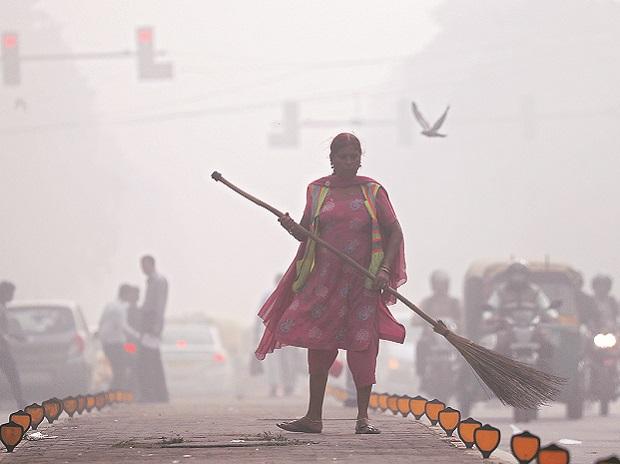
The severity of Delhi's air pollution woes has earned the issue a place in the Centre's allocations in Budget 2018. According to reports, an amount of Rs 10 billion (1,000 crore) will be allocated under Budget 2018 to combat problems like stubble burning, which has been attributed as a major cause for Delhi's now-notorious air quality.

In an effort to clean up the capital's air, or at least make it more breathable, and end the residents' annual exercise of choking under a blanket of smog, the Centre has decided to earmark Rs 10 billion (1,000 crore) in the upcoming Budget to curb the practice of stubble burning in Delhi's neighbouring states like Punjab and Haryana, the Times of India reported on Thursday.

How will the Centre put a stop to stubble burning, an issue that proved to be contentious and saw the Delhi and Punjab governments juggle blame last year, and get farmers to find better ways to dispose of agricultural waste? The answer lies in subsidies for said farmers. The national daily reported that Additional Solicitor General A N S Nadkarni informed a Bench of Justices Madan B Lokur and Deepak Gupta that the Centre would provide subsidies to farmers to purchase machines like Happy Seeder and Rotavators. These machines are meant to help farmers dispose of farm residue without burning it. According to the report, these machines sow wheat into the soil while simultaneously cutting and lifting rice straw. As a result, the stubble remains in the fields without hampering the sowing of a new crop.

According to recommendations, individual farmers who purchase the machines will receive a subsidy of 50 per cent of the purchase price, the report said. The subsidy will be distributed by means of a direct benefit transfer mechanism. Further, a subsidy of 75 per cent of the machinery's cost will be given to cooperative societies, gram panchayats, and farmer groups, the report added.

Wednesday, 24 January 2018

Union Budget 2018: Impact on Smartphones in India

Mr. Kalirona stated that if the government supports the manufacturing sector of mobile industry, it would support our Prime Minister's vision of "Make in India".

smartphone-reu-L

The entire nation has their eyes set on the fifth and last full-fledged Union Budget in Narendra Modi’s government to be presented in Lok Sabha. This Union Budget will be presented on February 1, 2018, by Mr. Arun Jaitley, our Finance Minister. This Union Budget has a lot of significance as it is presented after two big financial decisions made in Mr. Modi’s government- Demonetization and GST. The previous year’s budget was also very unique as railway budget and general budget were presented on the same day.

Everybody is expecting some statement to be made about their respective sector in this Union Budget. There is anticipation that mobile phones may become cheaper after February 1, 2018.

Union Budget 2018: Smartphones to go cheaper?

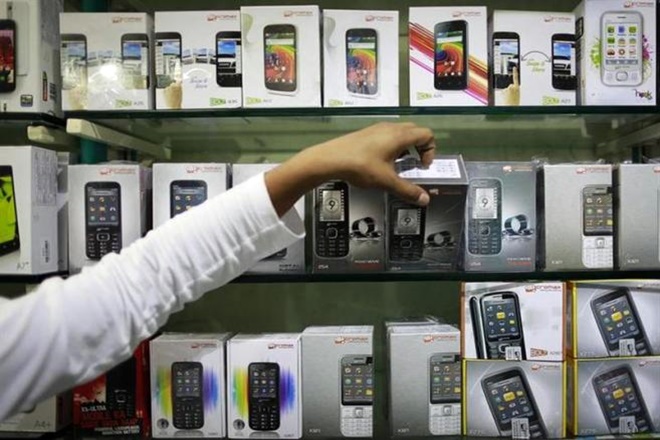
Mobile phones are seen in every common man’s possession, especially youth. Youth is expecting cheaper handsets for use. The CEO and Director of COMIO Smartphones, Sanjay Kalirona said that the GST has to be reduced from 12%-5% and offer tax reductions to promote the mobile industry market in India. This should help in making mobiles affordable to the common man, especially youth. All the industrialists are looking up to Union Budget’s support for acceptable budgetary allocation for the growth of the mobile industry.

Relief For Manufacturer of Smartphones?

India is the fastest growing mobile market in the world. The CEO COMIO also mentioned that our country has a lot of potential for component manufacture and building a self-sufficient ecosystem. Read More

Tuesday, 23 January 2018

Facts about India's Union Budget you may not know

India's yearly Union Budget is when the government lay out its finances, estimates, policies and much more. This is also when the government accounts for its revenue and expenditure.

India Finance Minister Arun Jaitley Delivers Annual Budget Statement

India’s yearly Union Budget 2018 is when the government lay out its finances, estimates, policies and much more. This is also when the government accounts for its revenue and expenditure. But the budget is much more than that, the union budget of India has its own rich history, it’s an occasion when our democracy is celebrated, it’s a festival of sought. James Wilson, Finance Member of the India Council presented the first Budget in India on February 18, 1869. The first Budget of Independent India was presented by the first Finance Minister of India R.K. Shanmukham Chetty on 26th November 1947 at 5 pm. The tradition of presenting the Budget at 5 pm was a colonial tradition that was practised till 2001, this was when the then FM Yashwant Sinha changed it and started presenting the budget at 11 am. After India became a Republic, John Mathai on February 28, 1950 presented the first Budget of the Republic of India.

On which date the budget would be presented is actually decided by the President of India. Morarji Desai has presented a total of 10 union budgets which is the most for any Finance Minister. Also as he was born on 29th February he presented two budgets on his birthday in 1964 and 1968. Jawaharlal Lal Nehru in 1958-59 held the union finance minister portfolio and thus became the first prime minister of India to present the budget. Indira Gandhi became the first and the only woman Finance Minister to present the budget when she held the Finance portfolio from 1970 to 1971. Jawaharlal Lal Nehru, Indira Gandhi and Rajiv Gandhi have presented the budget as serving Prime Minister of India as they held the Finance portfolio. Since 1955-56 all Budget papers are prepared and presented in Hindi too, along with English. Mentioned below are some other interesting facts about the India union budget.

Halwa Ceremony – India is the land of rituals, thus why should the Indian Parliament be any different? Halwa Ceremony is a ceremony which precedes the printing of the budget documents. In the said ceremony Halwa which is a sweet dessert is prepared and served to the officers and staff of the ministry who are involved in preparation and printing of the budget documents. The Halwa ceremony is attended by the Finance Minister himself who also serves the dessert to his officers and staff. In Indian culture before the beginning of any endeavour eating something sweet is considered auspicious hence the ceremony. The special North Block printing press is used to print the Budget documents and this is the basement where the Halwa ceremony is conducted since 1980.After the Halwa Ceremony around 100 officers and staff who are involved in preparing and printing the Budget are kept in total isolation to maintain complete secrecy. Only emergency calls and that to under strict supervision are permitted. Printing of the Budget documents takes around a week to ten days. Only just before the FM starts delivering his Budget speech are the staff permitted to communicate with the outside world.

Budget 2018: Fear of outright populism overdone, say analysts

Markets eyeing details on fiscal math, increased focus on infra, LTCG on equity investments

1514736908-7274

The current market rally a month before the Budget 2018 proposals are announced on February 1 is the best in over a decade, with the S&P BSE Sensex and the Nifty50 indices gaining over six per cent so far in calendar year 2018 and crossing the 36,000- and 11,000-levels, respectively, for the first time ever on Tuesday.

Though most analysts do not expect the proposals to be hugely populist, brokerages would keep a close watch on how the government manages the fiscal situation a year before the country goes to polls scheduled in May 2019, and changes, if any, to the existing norms of long-term capital gains tax (LTCG) on equities.

While analysts peg the fiscal deficit for FY19 to be around 3.2 per cent, any change to the LTCG tax structure on equities could be a sentiment damper, analysts say. Increased allocation for infrastructure such as affordable housing, roads, railways, and ports is also possible.

Here is a quick compilation of what leading brokerages and research houses expect:

CITI

We expect the government to project the fiscal deficit at 3.2 per cent of the gross domestic product (GDP) in FY19 from 3.5 per cent of GDP in FY18. Markets will keenly watch for the expenditure tilt (we expect focus on agriculture, infrastructure, and housing), revenue projections (first-ever goods and services tax or GST projection, divestment strategy, tweaks in LTCG for equity investment) and finally commitment to adopt Fiscal Responsibility and Budget Management (FRBM) recommendations. Read More

Budget 2018: All eyes on Arun Jaitley's announcements for the rural sector

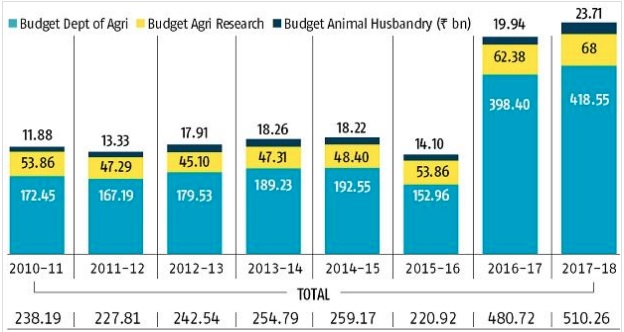
The Budget allocation for Ministry of Agriculture and allied activities has grown by 114% since 2010-11

1516735229-1725

As Finance Minister Arun Jaitley gets down to deliver his fifth annual Budget for the 2018-19 financial year, all eyes will be on his announcements for the rural sector which is going through a downturn in the last few years. Two consecutive droughts along with a sharp fall in incomes have turned agriculture unprofitable resulting in massive agitations in several parts of the country.

According to some estimates, in the 2017 Kharif season alone, an estimated Rs 360 billion has been denied to farmers for not being able to sell their produce at the state-mandated Minimum Support Price (MSP). The fall in farm incomes not only threatens to dent the ruling BJP electorally but could also raise a big question mark on the government’s promise to double incomes by 2022.

In this perspective, Business Standard looks at budgetary allocation for agriculture and allied sectors in the past few years under the UPA and first years of the NDA along with agriculture growth during these years.

The Budget allocation for Ministry of Agriculture and allied activities, which includes the departments of agriculture research and animal husbandry, has grown by 114% since 2010-11, with a big jump coming from 2016-17 after the government started adding the expenditure incurred on interest subvention on short-term crop loans under the Ministry of Agriculture.

Agriculture

But, the higher budgetary allocation hasn’t translated big time into farm growth, projected to drop to its lowest level in recent times in 2017-18, according to the first Advanced Estimate. Though, allocations aren’t meant to boost growth and just give the direction of the govt’s spending.

Click Here To Read More : Budget 2018

Budget 2018: Govt to extend Modi's flagship PMJDY scheme, double overdraft

The financial inclusion scheme could also reportedly see the overdraft amount sanctioned under it double as the government looks to use it to promote entrepreneurship by providing bank loans
 
1462292695-6751660
 
Prime Minister Narendra Modi's flagship programme, the Pradhan Mantri Jan-Dhan Yojana (PMJDY), which completed three years in August last year and was credited by Finance Minister Arun Jaitley for unleashing the "JAM" -- Jan Dhan, Aadhaar, Mobile -- revolution, is set to receive an extension in Budget 2018, which is just days away. The financial inclusion scheme could also reportedly see the overdraft amount sanctioned under it double as the government looks to use it to promote entrepreneurship by providing bank loans.
 
A senior government official told financial daily The Economic Times that during Budget 2018, an announcement on PMJDY being extended is expected. The unnamed official added that an increase in the overdraft amount under the scheme could also be on the cards. Stating that the government was looking to "build upon" the scheme, the official told the financial daily that it was also going to "bundle other financial products" under PMJDY, which will see its second phase end in August.
 
 
Currently, under PMJDY, one account, preferably belonging to a woman, in every household can avail of an overdraft of Rs 5,000 once the account has been satisfactorily operated for six months. According to the financial daily, this amount could be doubled to Rs 10,000 in order to allow access to easy emergency funds. The above-mentioned government official told the financial daily that such a move was "being discussed" and the overdraft amount could be "doubled" for those accounts that are "receiving direct benefit transfer through one or more schemes".
 
Originally envisioned for providing financial inclusion to all Indian citizens by ensuring that at least one person from every household possesses a bank account, the PMJDY scheme is also being seen by the government as a vehicle for promoting entrepreneurship. According to the financial daily, the government plans to push lenders to provide entrepreneurship a boost using the good operative accounts.
 
Modi's flagship financial inclusion scheme:
 
The stated objective of the ambitious scheme is to bring society's excluded sections under the formal financial system's umbrella.
 
As of October last year, close to 300 million (30 crore) people had opened accounts under the scheme, which was launched in 2014 by PM Modi. At present, according to the latest data available on the PMJDY site, 309.7 million (30.97 crore) beneficiaries have banked under the scheme, the beneficiary accounts hold a balance of Rs 736.90 billion (73,689.72 crore), and 126,000 (1.26 lakh) Bank Mitras are delivering branch-less banking services in sub-service areas.
 
As of August last year, 60 per cent of the accounts opened under the scheme belonged to people living in rural and semi-urban areas.
 
However, the scheme was only one part of the government's strategy to ensure financial inclusion. Subsequently, the government also brought in other financial products, such as life insurance. Another initiative launched by the government in this regard is Mudra, which aims to provide credit to micro enterprises.